Pearson Edexcel · GCSE · Psychology
Course version: 1PS0 · Version from Sept 2017
Know what neurons and synapses are, including: a. function of…
Full specification wording
The brain and neuropsychology: 4.1.3 Know what neurons and synapses are, including: a. function of neurotransmitters b. synaptic functioning c. how neurons and synapses interact d. understand the role of the central nervous system
Neurons are specialised cells that transmit electrical and chemical signals throughout the body.
Checked against the Pearson Edexcel 1PS0 specification (opens in a new tab) on .
- Point 3 of 4
- 4 key terms
Study notes
From the checked teaching notes for this specification point.
The idea
Neurons are specialised cells that transmit electrical and chemical signals throughout the body. The central nervous system (CNS), comprising the brain and spinal cord, processes these signals to coordinate behaviour. When an electrical impulse reaches the end of a neuron, it triggers the release of chemical messengers called neurotransmitters into the synapse, the tiny gap between neurons. These neurotransmitters diffuse across the synaptic cleft and bind to specific receptors on the next neuron, passing the signal on. For example, dopamine is a neurotransmitter involved in reward pathways. Understanding how neurons and synapses interact is crucial for explaining how the CNS controls everything from simple reflexes to complex thoughts.
What earns the marks
- Identify the central nervous system as consisting of the brain and the spinal cord.
- Describe the role of the central nervous system in processing information and coordinating responses.
- Explain that neurotransmitters are chemical messengers that transmit signals across a synaptic gap.
- Outline the process of synaptic transmission, including the release of neurotransmitters and their binding to receptors on the post-synaptic neuron.
- Recognise how electrical impulses travel along a neuron and convert to chemical signals at the synapse.
Common mistakes and how to put them right
Mistaking the synapse for a physical connection.
Put it right: The synapse includes a physical gap (synaptic cleft) that neurotransmitters must cross.
Confusing electrical and chemical transmission.
Put it right: Electrical impulses travel within the neuron, whereas chemical transmission occurs between neurons across the synapse.
Believing neurotransmitters enter the next neuron.
Put it right: They actually bind to receptors on the surface of the post-synaptic neuron and do not enter it.
Exam tips
- When describing synaptic functioning, clearly distinguish between the pre-synaptic neuron releasing the chemical and the post-synaptic neuron receiving it.
- Use the lock and key analogy to explain how specific neurotransmitters bind only to their corresponding receptors.
- Remember that the central nervous system only includes the brain and spinal cord, not the peripheral nerves.
Try the lesson
The start of the The brain and neuropsychology: 4.1.3 Know what neurons and synapses are, including: a. function of neurotransmitters b. synaptic functioning c. how neurons and synapses interact d. understand the role of the central nervous system lesson, made from checked teaching notes for this specification point.
Have a go first
What is the primary function of neurotransmitters in the nervous system?
Listen
Neurons are specialised cells that transmit electrical and chemical signals throughout the body. The central nervous system (CNS), comprising the brain and spinal cord, processes these signals to coordinate behaviour. When an electrical impulse reaches the end of a neuron, it triggers the release of chemical messengers called neurotransmitters into the synapse, the tiny gap between neurons. These neurotransmitters diffuse across the synaptic cleft and bind to specific receptors on the next neuron, passing the signal on. For example, dopamine is a neurotransmitter involved in reward pathways. Understanding how neurons and synapses interact is crucial for explaining how the CNS controls everything from simple reflexes to complex thoughts. A strong answer earns marks for these points. Identify the central nervous system as consisting of the brain and the spinal cord. Describe the role of the central nervous system in processing information and coordinating responses. Explain that neurotransmitters are chemical messengers that transmit signals across a synaptic gap. Outline the process of synaptic transmission, including the release of neurotransmitters and their binding to receptors on the post-synaptic neuron. Exam tip: When describing synaptic functioning, clearly distinguish between the pre-synaptic neuron releasing the chemical and the post-synaptic neuron receiving it.
See it
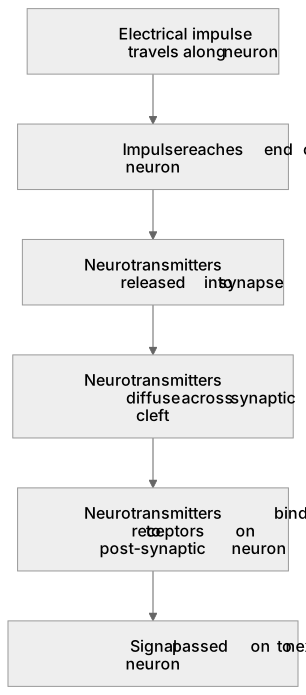
Put it in order
Put these steps in the order they happen.
- 1. Neurotransmitters released into synapse
- 2. Impulse reaches end of neuron
- 3. Electrical impulse travels along neuron
- 4. Signal passed on to next neuron
- 5. Neurotransmitters bind to receptors on post-synaptic neuron
- 6. Neurotransmitters diffuse across synaptic cleft
Key words
Say what each word means before you turn the card.
Chemical transmission
Try answering aloud or in your head before turning the card.
Nervous system organisation
Try answering aloud or in your head before turning the card.
Information processing
Try answering aloud or in your head before turning the card.
Biological structures
Try answering aloud or in your head before turning the card.
See every definition
- Chemical transmission
- The release of chemical messengers called neurotransmitters into the synapse when an electrical impulse reaches the end of a neuron.
- Nervous system organisation
- The central nervous system consists of the brain and the spinal cord, and it processes signals to coordinate behaviour.
- Information processing
- The central nervous system processes signals to coordinate behaviour, controlling everything from simple reflexes to complex thoughts.
- Biological structures
- Neurons are specialised cells that transmit electrical and chemical signals throughout the body, and the synapse is the tiny gap between neurons.
Label the diagram
Some boxes have lost their names. Pick the right name for each number.
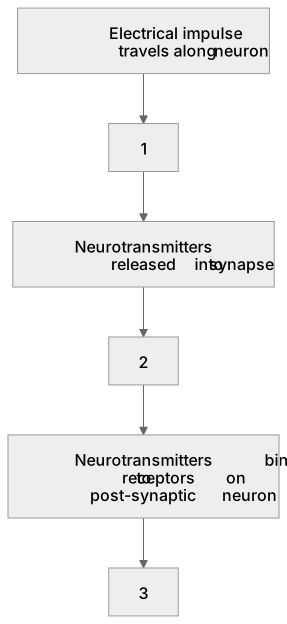
1Box 1
2Box 2
3Box 3
There is more to this lesson
The full lesson goes on to check your understanding and help you earn the marks. Create a free account to carry on, with your progress saved.
A week of Premium from your first lesson · Then the free plan continues · No card, no charge
Test your understanding of The brain and neuropsychology: 4.1.3 Know what neurons and synapses are, including: a. function of neurotransmitters b. synaptic functioning c. how neurons and synapses interact d. understand the role of the central nervous system
Active recall beats re-reading. Take an instant quiz now to test what you’ve learned and lock it into long-term memory.
A week of Premium from your first lesson · Then the free plan continues · No card, no charge